

Traveling with RP: Safe on the Road – Step by Step
Why This Guide?
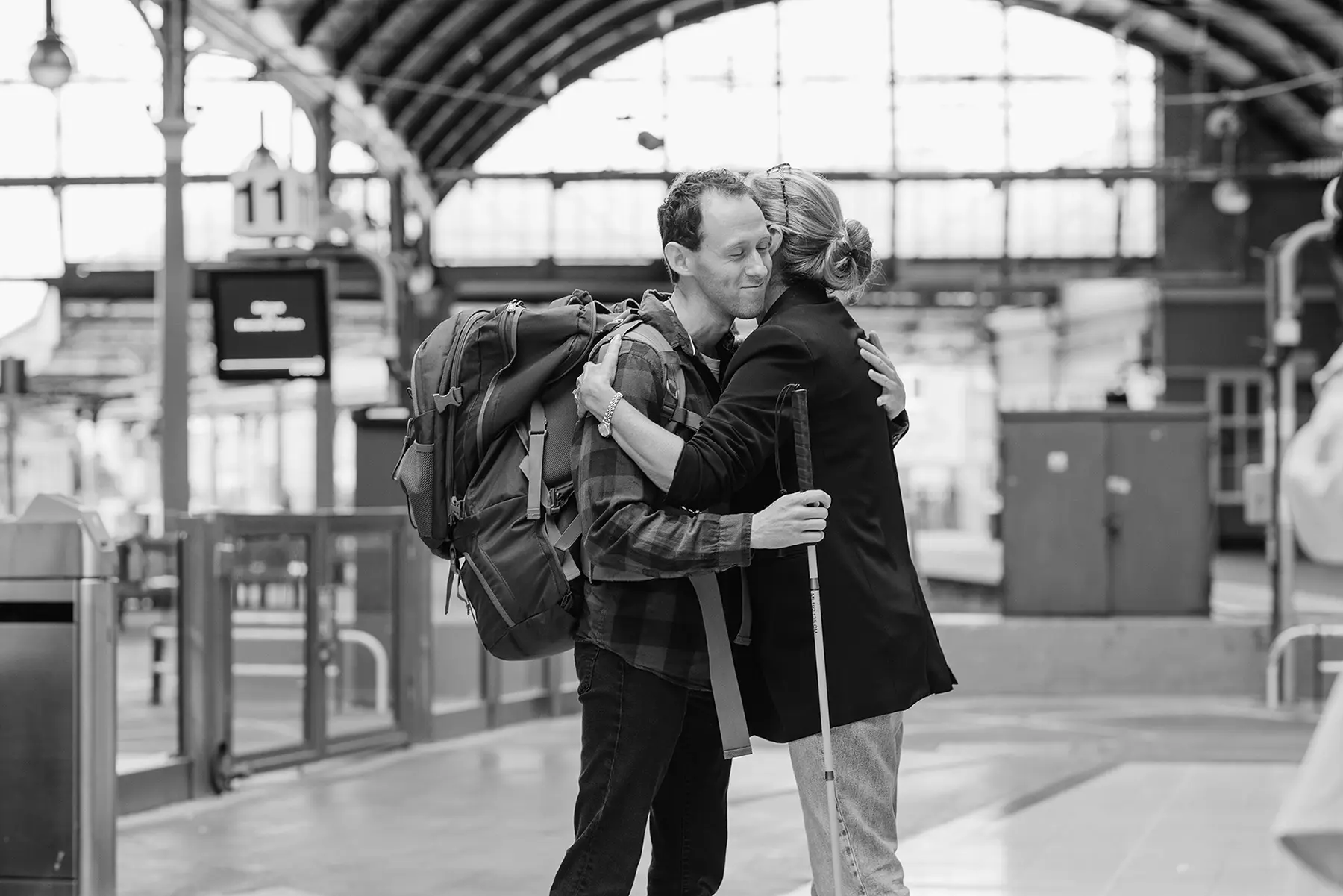
Traveling with Retinitis pigmentosa is feasible when preparation is right. With some well-considered decisions in advance – and clear arrangements along the way – you reduce stress, maintain orientation, and arrive more relaxed. This article guides you chronologically from route selection and assistance through security screening to the TES routine with OkuStim® while traveling.
Planning: Route, Time Windows, Light
The fewer transfers, the more predictable the journey becomes. Plan generous buffers so you can read signs calmly, find your way, and meet assistance. If possible, pay attention to times of day with more comfortable light; midday glare under glass roofs or twilight with weak contrasts increase strain. A quick look at the map view helps locate entrances, elevators, and service points in advance.
Planning Checklist (brief):
- Prefer direct connections, build in buffers
- Check light windows (less glare)
- Note arrival route (2–3 landmarks as photo/note)
Book Assistance & Services Early
At the airport, assistants can accompany you from the entrance or check-in to your seat; during transfers, it continues at the gate. Rail/public transport also offer escort services. Register your needs early and describe them specifically.
Remember When Making an Enquiry:
- Booking number, date, route
- Meeting point (entrance/check-in), destination (gate/seat)
- Needs: Escort through security screening, gate-to-gate during transfers
Orientation at the Station/Airport
Look out for strong contrasts in signs, floor markings, and railings. Sounds (announcements, escalators, flow of people) serve as guiding cues. Record key points as photos or voice notes (“kiosk on right, elevator on left”). If a marker is missing due to construction, head to a service point or gate staff.
Quick Tips On-Site:
- Contrasts> Pictograms
- Use sounds as guiding cues
- Document landmarks (photo/audio)
Documents, Medication & Devices – Including OkuStim®
Keep documents in duplicate: digitally on your smartphone and printed in a folder. Pack medications and consumables for the entire travel duration plus reserve. If you like – you can transport the OkuStim® system (base unit, electrodes, charger/adapter) in your carry-on luggage.
Worth Taking:
- Tickets, assistance confirmation, addresses (digital + printed)
- Medication, OkuStim® + accessories, small reserve
- Brief note for security: "Non-implanted medical device; home use; unproblematic when switched off"
Security Screening Without Stress
Arrive early enough and proactively state that you have a visual impairment and are carrying a medical device. This is usually sufficient for a calmer process or manual inspection. Please pack liquids/drops according to standard regulations; for exceptions, briefly mention the medical purpose.
Tip: Place the device and information note within easy reach at the top of your carry-on – this avoids having to look for it.
En Route: Energy, Breaks, Communication
Changing light conditions and dense crowds are exhausting. When possible, choose seats with more consistent light and reduce glare (filter/sunglasses, cap). Short breaks in quieter areas give your eyes and mind time to “catch up.” Arrange clear meeting points and times with your companion or assistance.
When It Gets Challenging:
- Adjust seat/light
- Take a 2-minute break
- Confirm location/next destination aloud
Arrival & Hotel
Check-in during daylight makes orientation easier. Photograph routes between entrance, reception, elevator, and room. Consistent room lighting and a color-contrasting surface for small items (e.g., charger) prevent searching.
Quick Orientation:
- Two photos: Entrance ↔ Reception, Reception ↔ Elevator
- Position lamps to avoid harsh shadows
TES Routine with OkuStim® While Traveling
Set a fixed time window in advance (e.g., evenings at the hotel) and use a quiet, well-lit location. Prepare everything before starting. For longer trips, plan consumables generously.
For Reliable Success:
- Fixed weekly schedule, quiet location, good lighting
- Prepare materials in advance
- If uncertain: briefly consult before the trip
Return Journey & Follow-Up
After the trip, a 2-minute review is worthwhile: What worked well? Where was it challenging and why? These notes are invaluable for the next planning – and for the next medical consultation when discussing everyday situations or adjustments.
Insights onTherapy, Research & Company

Education & Career: Achieving Disadvantage Compensation
Fair conditions without special privileges: How to apply for adjustments and implement them practically.

RP & Mental Health
Why RP is a burden – and what is proven to help: education, support, rehab, and preservation of function. With concrete strategies for everyday life.
EUTB®: Free Participation Counseling
Independent, individual, and accessible: EUTB® supports you – including with cost coverage applications for OkuStim® therapy.