

"I refuse to give up" – Experiences with Retinitis pigmentosa (RP) & OkuStim®
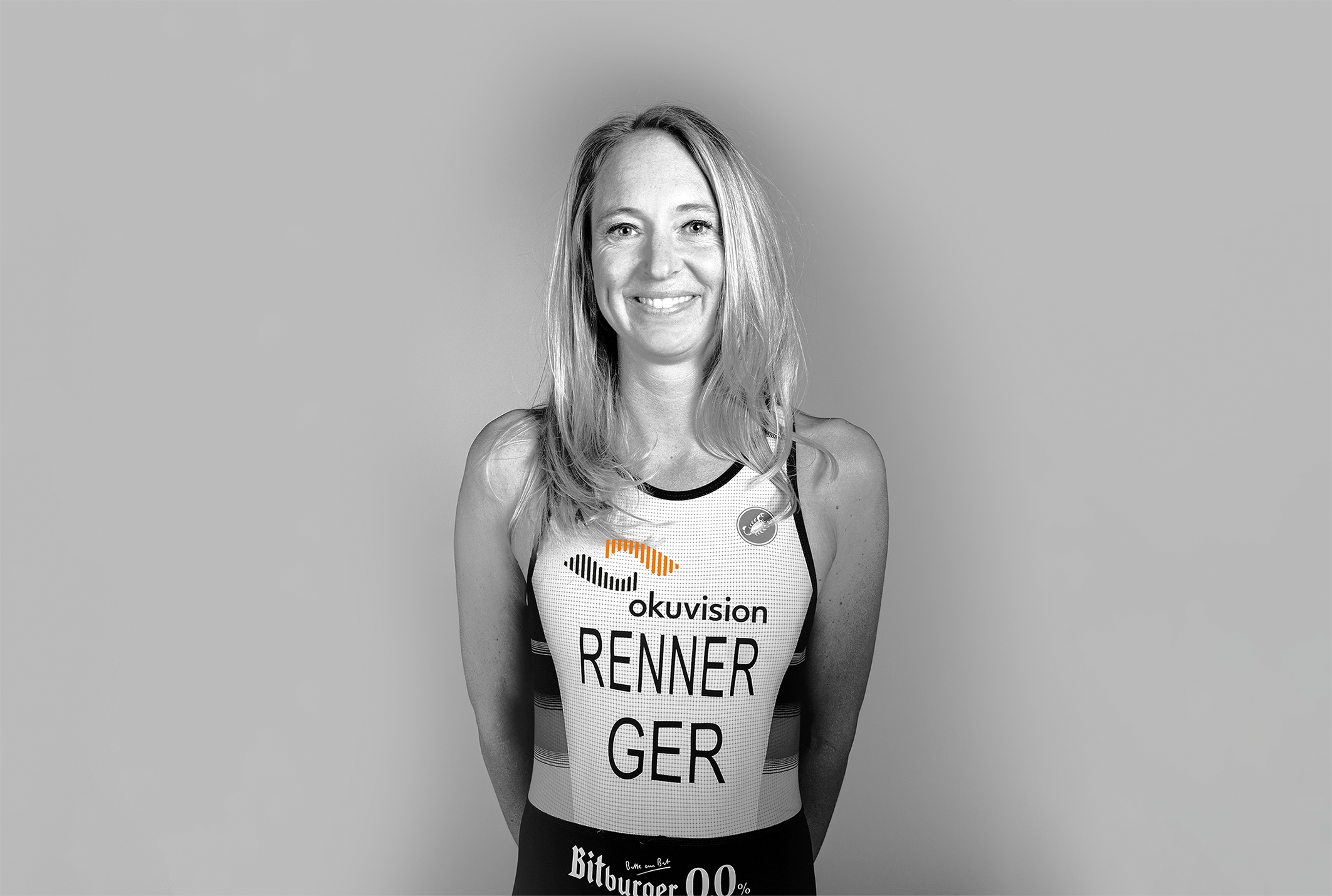
Paratriathlete Anja Renner openly shares her life with RP and her experiences with OkuStim® therapy – honest, relatable, encouraging.
Why patient stories matter – and what they cannot provide
When someone receives a diagnosis of Retinitis pigmentosa (RP) or another hereditary retinal disease, they seek answers – but often, above all, people who have already walked this path. Patient stories provide encouragement, offer practical ideas for everyday life, and help contextualize decisions not just “on paper,” but in real life.
Equally important is the boundary: every story is an individual case. What helps Anja or Moritz may not work for everyone. Medical decisions belong in clinical consultation – patient stories do not replace diagnostics or clinical guidelines.
Anja Renner – Usher syndrome,paratriathlon and perseverance1
From shock to resolve: "I'm not giving up"
Anja Renner has been hearing impaired since birth. At age 25, she receives the diagnosis of Usher syndrome – a condition affecting both hearing and vision. Vision gradually declines due to Retinitis pigmentosa. Years later, she describes: “Today I see only about 10% of what most people see.” Instead of resigning, she formulates her personal counter-strategy: not giving up, adapting step by step, staying mentally strong.1
Competitive sports with less than 10% residual vision
Anja finds a platform for this mindset in paratriathlon. With a guide, she rides tandem, trains with focus, and plans her races meticulously. Those who follow her sense: it is about self-determination – not about denying difficulties. Training is her compass; she speaks openly about setbacks and the feeling of constantly reinventing herself.1
“The diagnosis was a shock that pulled the ground out from under my feet. But I refused to give up.” – Anja Renner1
What Anja shares with others
- Allow acceptance, maintain activity. The disease may be acknowledged – and yet there is room for action every day.1
- Bring your support network on board. Guides, family, friends – those who share the burden make new paths possible.1
- Define success for yourself. Sometimes “success” is a good training day, sometimes a smart plan B.1
What many patients experience similarly –common patterns
Emotions & mindset: Between grief, anger, and hope
The patient story typically begins with a shock: the moment when it becomes clear that something fundamental about vision is no longer as it was. From shock emerges resolve: “I refuse to give up” (Anja). This is not about “everything is fine,” but rather the decision to keep moving forward – with the disease, not against life.1
Practical translation
- Allow what is there (frustration, grief) – and create space for hope.
- Think of success in small terms: arriving more safely today, testing a new routine, one less obstacle.
- Activate your social network: guides, family, colleagues – do not carry everything alone.1
Everyday life & tools: From edge filters to app-based guidance
Structure helps. Fixed training or therapy times, clear routines, tools that are truly usable. For some, this means edge filters and good lighting; for others, digital assistants, orientation aids, text-to-speech apps, voice output, zoom functions, or consistent contrast design in the workplace. What matters is not the “perfect” solution, but the right one – today, for this everyday life.1
Medicine & therapy: Why standardization in follow-up care helps
Which approach or routine makes sense for individual patients always belongs in a clinically supervised setting: suitability, current intensity, frequency, follow-up examinations (e.g., visual field, OCT) – everything is planned there. Experiences cannot be transferred one-to-one, but they provide starting points for good questions in consultation with the physician.
Key point: Patient stories complement medicine. They do not replace medical decisions.1
Frequently asked questions from the community (FAQ)
No. Anja’s journey shows: sports remain possible, often with adaptations – e.g., with a guide in paratriathlon, planned training, clear risk management. It is important to realistically assess your own capacity and coordinate with the treatment team.1
Openness in measured steps helps: say what you need (e.g., tandem, more light, clear contrasts), and also what does not help. Many people want to support – they need concrete guidance.1
Both stories show: low points are part of the journey. Small steps, reliable routines, people who walk alongside – these provide support. And: seeking professional counseling (e.g., rehabilitation counseling, psychotherapy) is strength, not weakness.1
References
1 Renner A. Paratriathlon & Living with Usher syndrome. Personal website. www.anja-renner.com. Last accessed: December 2025.
Insights onTherapy, Research & Company

Everything but Flying
Former pilot Reinhard stabilizes his condition with TES – with routine and confidence.

Maintaining quality of life
Ines has relied on TES for years – active in her studies, sport, and everyday life.
Seize Opportunities
Living with RP for decades, using TES since 2019: Haap relies on structure, support, and optimism. He reports noticeable changes in his daily life.